Football Betting in 2026: From Match Picks to In-Play Odds and VAR
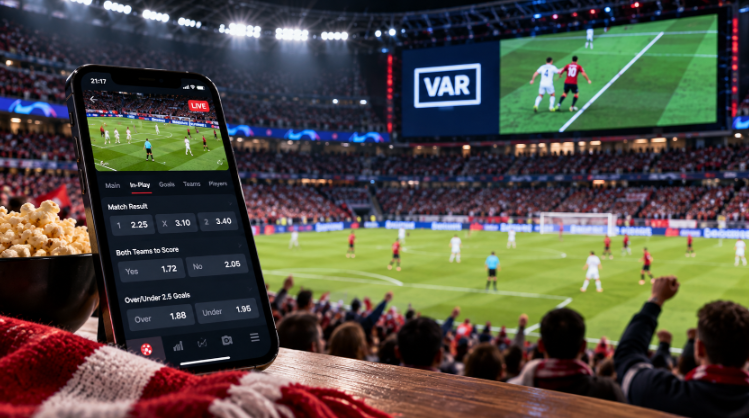
One Corner Decision Can Now Change More Than the Score
At its February 28, 2026 meeting, the IFAB approved additional VAR checks for clearly incorrect second yellow cards, mistaken identity and incorrectly awarded corners. Corner reviews are optional for competitions and must be completed immediately without delaying the restart. The 2026/27 Laws took effect on July 1; approval does not mean every league has adopted the optional corner review.
Football betting has followed a parallel move from pre-match predictions to rapidly changing in-play markets. A mobile screen can now offer the next goal, total corners and match result at different prices as the game unfolds. The rules of football remain separate from the rules of a wager.
The Original Match Pick Had One Big Limitation
A pre-match 1X2 market offers three regulation-time outcomes: home win, draw or away win. A cup match that goes to extra time is often treated differently from a 90-minute market, depending on the operator’s published terms. That distinction matters when a team wins the tie but does not win within normal time.
Before live markets became a routine phone feature, bettors had fewer opportunities to respond to a changed lineup or a red card after kickoff. Pre-match analysis still provides a baseline: team strength, rest days, venue and expected formations.
A Moving Quote Is a Price, Not a Second Scoreboard
Decimal odds of 2.50 imply a break-even probability of 40% before accounting for bookmaker margin. If an in-play price falls to 1.60, the implied number rises to 62.5%, again before margin. The change can reflect the match clock, a goal, a sending-off or revised expectations about the remaining time.
A quotation on the screen is not necessarily the price at which a bet was accepted. A market can be suspended during a dangerous attack and reopen at a new number. Settlement depends on the accepted ticket and the market definition, not an odds snapshot captured seconds later.
A Video Review Creates a Timing Problem
Under the 2026/27 protocol, a clearly incorrect second caution leading to a red card may be reviewed, as may certain mistaken-identity decisions. A wrong corner can be corrected only where the competition has adopted that option and play has not restarted. A broadcast may also show an incident after the official data feed has registered a stoppage.
During a review, a sportsbook may suspend related markets while awaiting confirmation. A provisional goal or corner displayed by a score app can later change. Fans comparing live football data should distinguish an on-field signal, an official decision and the moment a betting system updates its market.
Sportsbook Markets and Casino Games Have Different Engines
A football wager settles against an actual sporting event and the written market rules. The result can involve a referee’s decision, a final score or a statistical provider’s recorded event. A slot at an online casino site operates on a published game design and RNG rather than the outcome of a real match. Return to player gives a theoretical long-run return for the game, not a prediction of a particular spin. A sports market uses odds and bookmaker margin instead.
The UK Gambling Commission’s remote technical standards require regulated games to explain result determination and relevant odds or RTP information. A bettor who moves between a sportsbook and casino lobby should read the corresponding rule set.
A Brand Name Does Not Settle the Legal Question
An odds comparison may identify several pages with the same commercial brand but different country-facing domains. Two pages can display different payment options and market rules without either proving local authorization. A reader finding MelBet in football search results should check the precise domain, published settlement conditions and relevant jurisdiction. A logo on a mirrored site cannot establish whether its account or payment services are approved. Publishing a price is also distinct from accepting a lawful wager.
India’s Promotion and Regulation of Online Gaming Act, 2025, implemented by rules effective May 1, 2026, prohibits online money games and their promotion. The legal answer must come from official notices, not a betting search result.
The Same Match Can Carry Several Kinds of Data
Three numbers commonly confused on a football screen are the score, a statistic and a betting price. A 1–0 score describes goals awarded; six corners describe a counted match event; decimal 1.75 describes an offered price for a specified selection. If the official statistics supplier revises a corner count, relevant settlement rules can determine how a completed bet is treated.
Football followers can keep separate notes for the timestamp of a quote, the official match event and the eventual ruling. That record helps explain why a live market moved without assuming a price was wrong simply because a television replay appeared late.
A Better Preview Starts Before the Market Opens
Useful pre-match research is a short checklist rather than a claim of certainty:
- Confirm the competition’s regulation-time and extra-time format
- Check the announced lineup against earlier team news
- Identify whether the market is 1X2, handicap, goals or a statistic
- Record accepted odds and the provider’s settlement definition
Football betting in 2026 provides many ways to express a prediction. The lasting advantage of careful analysis is clarity about what is being predicted and what must happen for that selection to be graded correctly.
Category: Betting ResourcesBTTS and Draw Predictions in 22Bet Virtual Sports
BTTS and Draw Predictions in 22Bet Virtual Sports: How to Find Balanced Football Matches

Predicting outcomes in 22Bet Virtual Sports is an exciting challenge, especially when aiming for combinations like Both Teams to Score (BTTS) and a Draw. In Virtual Sports football matches, a 1-1 or 2-2 score line typically occurs when two evenly matched algorithms face off with strong offensive stats and vulnerable defensive metrics. To consistently spot these opportunities, you need to look beyond basic league standings and analyze team form and statistical match-ups.
This guide shows you simple ways to spot balanced football matches for BTTS + Draw bets in 22Bet Virtual Sports. By analyzing simulated goal averages, tactical algorithms, head-to-head data, and virtual team momentum, you can make better choices and manage your risk effectively.
Key Indicators of Balanced Opponents
First, look for virtual teams that are close in rating and strength. When two sides are evenly matched in 22Bet Virtual Sports, neither side dominates the match easily. Whether you follow real football or prefer virtual sports betting on weekends, both teams must have strong attack parameters while consistently conceding goals. Expected Goals (xG) metrics in Virtual Sports simulation statistics quickly reveal whether recent scorelines accurately reflect team efficiency.
Weak defenses are key for BTTS bets. Two purely defensive teams might draw 0-0, which ruins a BTTS pick. Focus on teams that rarely keep clean sheets but still find the net regularly. Teams that press high or struggle with set pieces often give away plenty of scoring chances.
Tactics also matter a lot. When two managers use aggressive counter-attacking styles, games often turn into back-and-forth battles where both teams score, but neither manages to win.
Step-by-Step Analytical Process for BTTS + Draw Match Selection
Follow these four simple steps to filter through matches each week:
- Check Goal Averages: Look at home and away goal records over the last 8 to 10 games. Pick teams that average at least 1.2 scored and 1.2 conceded per match.
- Review Past Meetings: Look at head-to-head history between the two clubs. See if past games ended in tight draws with goals on both sides under the current managers.
- Look for Key Absences: Check injury reports for defenders, defensive midfielders, or starting keepers. Missing key defenders often leads to goals without hurting the team’s attack.
- Understand Match Motivation: See if a draw suits both teams. Late in the season, two teams fighting for points might settle for a safe draw rather than risk a loss.
Key Metrics Comparison for Match Selection
| Metric / Parameter | Ideal BTTS + Draw Candidate | High-Risk Fixture (Avoid) |
|---|---|---|
| xG Difference | Under 0.35 xG difference between teams | Over 1.0 xG gap between sides |
| Clean Sheet Percentage | Under 25% for both teams | Over 45% for either team |
| BTTS Frequency | Over 60% in past 10 games | Under 40% in recent games |
| Historical Draw Rate | 30% or higher in H2H games | Under 15% in recent meetings |
| Tactical Style Matchup | Attack vs. Attack or Counter vs. Counter | Defensive vs. Ultra-defensive |
Tactical Factors and Common Pitfalls
Even with strong stats, unexpected things happen in football. Keeping these common traps in mind will help improve your predictions.
- Rivalry Games: Local derbies often lead to heated tackles, red cards, or super cautious tactics, which ruin normal scoring trends.
- Weather and Pitch Quality: Rain and bad pitches slow down quick attacks and favor tight defenses, lowering the total goal count.
- Home Advantage Factor: A solid home team against a slightly better away team often levels the playing field, making a 1-1 draw more likely.
- Late Game Defending: Teams leading 1-0 late in a match often sit deep, invite heavy pressure, and concede late equalizers.
Conclusion and Responsible Engagement
Finding good matches for BTTS + Draw bets comes down to pairing stats like xG with a practical look at team styles and motivation. Filtering out defensive matchups gives you a much better shot at picking solid high-value games.
Disclaimer & Responsible Play: Sports analysis and predictive modeling carry no guarantees of outcomes. Past statistical performance is not an indicator of future results. All sports and gaming activities should be approached strictly for entertainment purposes. Betting is restricted to individuals aged 25 and older in Uganda (or local legal age requirements). Always set strict session budgets and practice responsible play.
Category: Betting ResourcesInside the Smart Algorithms Shaping Modern Online Casinos
Inside the Smart Algorithms Shaping Modern Online Casinos
Two decades ago, online casinos were little more than digital replicas of brick-and-mortar floors. Today, they are intelligent, adaptive ecosystems that shape themselves around each player. The quiet revolution behind that shift is AI-driven personalization. Rather than serving the same lobby, bonus, or tournament to everyone, modern platforms use data and machine learning to curate experiences in real time. For advanced players, this is more than a convenience; it transforms how we discover games, manage our bankroll rhythm, and interact with promotions — without compromising fairness or the randomness that defines genuine casino play.
Understanding AI Personalization in Online Casinos
In essence, AI-driven personalization is the art of matching the right experience to the right player at the right moment. Platforms collect behavioural signals — session length, spin cadence, volatility preferences, favourite mechanics (sticky wilds, respins, cluster pays), tolerance for near-miss streaks, tournament participation — and feed them into machine learning models. Think of it as Netflix-style recommendations, but for mechanics and engagement loops rather than movie genres.
Under the bonnet, this involves a toolkit: supervised models that classify preference profiles, sequence models that learn session patterns, and contextual bandits that dynamically decide which offer or lobby tile to show next for maximum incremental engagement. Feature embeddings — compact mathematical representations of both players and games — let the system detect affinities such as “high-volatility slot fan who migrates to live blackjack after midnight” or “short-session, high-AUC (area under curve) bonus hunter who thrives on time-limited missions.” Importantly, these systems optimise presentation and timing, not outcomes; they can surface a game you’re likely to enjoy but cannot predict or influence its RNG-driven results.
Benefits for Advanced Players
For experienced users, the gains are practical and immediate. Lobbies become genuinely session-aware: if you typically warm up with a medium-volatility slot before switching to a live game, the layout anticipates that path, reducing search friction. The recommendation layer can also map mechanics rather than titles — if you like cascading reels with multipliers, it highlights fresh releases with similar risk curves, even from lesser-known studios you might otherwise miss.
Personalised promotions are evolving from static “deposit X, get Y” to dynamic offers tuned to real bankroll cadence and game preference. Contextual bandits test which bonus construct—free spins on a specific mechanic, wager-free micro-credits, or mission-based milestones—produces the best long-term engagement for you, then adjusts mid-flight. In tournaments, AI can propose brackets that match your pace and stake, making competition more meaningful without artificial difficulty settings. Even the interface adapts: cashier shortcuts surface preferred methods at the exact point your past behaviour suggests you’re ready, and responsible gaming tools are placed where you’re most likely to use them proactively.
Positive Impact on Fairness and Security
Personalization isn’t just about delight; it’s also a powerful integrity layer. Anomaly-detection models flag bonus abuse patterns, collusive behaviours in peer-to-peer games, and scripted play that hints at bots — all in near real time. Identity and device intelligence help keep accounts safe with minimal friction, while transaction models reduce false declines without compromising AML rigor. On the fairness front, reputable operators keep RNG certification and payout mechanics sacrosanct; the AI touches content curation, not randomness. Meanwhile, responsible gambling systems become smarter and more supportive, surfacing limit-setting or cool-off nudges well before problems arise — another quiet win for players.
Organic Anchor Placement & Example
Not all platforms execute this vision equally, but you can see the blueprint in modern, AI-forward lobbies. A thoughtfully engineered casino online experience will often illustrate the full stack: a lobby that reflects your session history rather than generic popularity charts; promotions that shift from broad seasonal offers to micro-challenges you’re statistically inclined to complete; notification timing that respects your play windows; and multi-vertical recommendations that understand when you’re ready to move from a high-volatility slot to a social live table. This is about making each minute you choose to spend feel more purposeful, coherent, and aligned with what you actually enjoy.
Future Trends and Conclusion
What’s next? Expect on-device inference that keeps more data local, reducing latency and enhancing privacy. Federated learning will help models improve across the network without centralising raw user data. Explainable AI will move from back-office dashboards to player-facing “why this was recommended” cues, building transparency and trust. Generative AI will quietly assist studios, fast-prototyping themed features that align with emerging player clusters. And regulators are warming to algorithmic audit trails that separate curation from outcome, codifying the principle that personalization enhances experience, not odds.
For seasoned players, the upside is clear: smarter discovery, more relevant rewards, and interfaces that feel bespoke, not busy. The smartest casinos will be adaptive companions to the way you already like to play—proof that when AI is used thoughtfully, it turns a good platform into a great one.
Category: Betting ResourcesHalf Time Draw Predictions – HT Draw Tips, Odds & Best Leagues
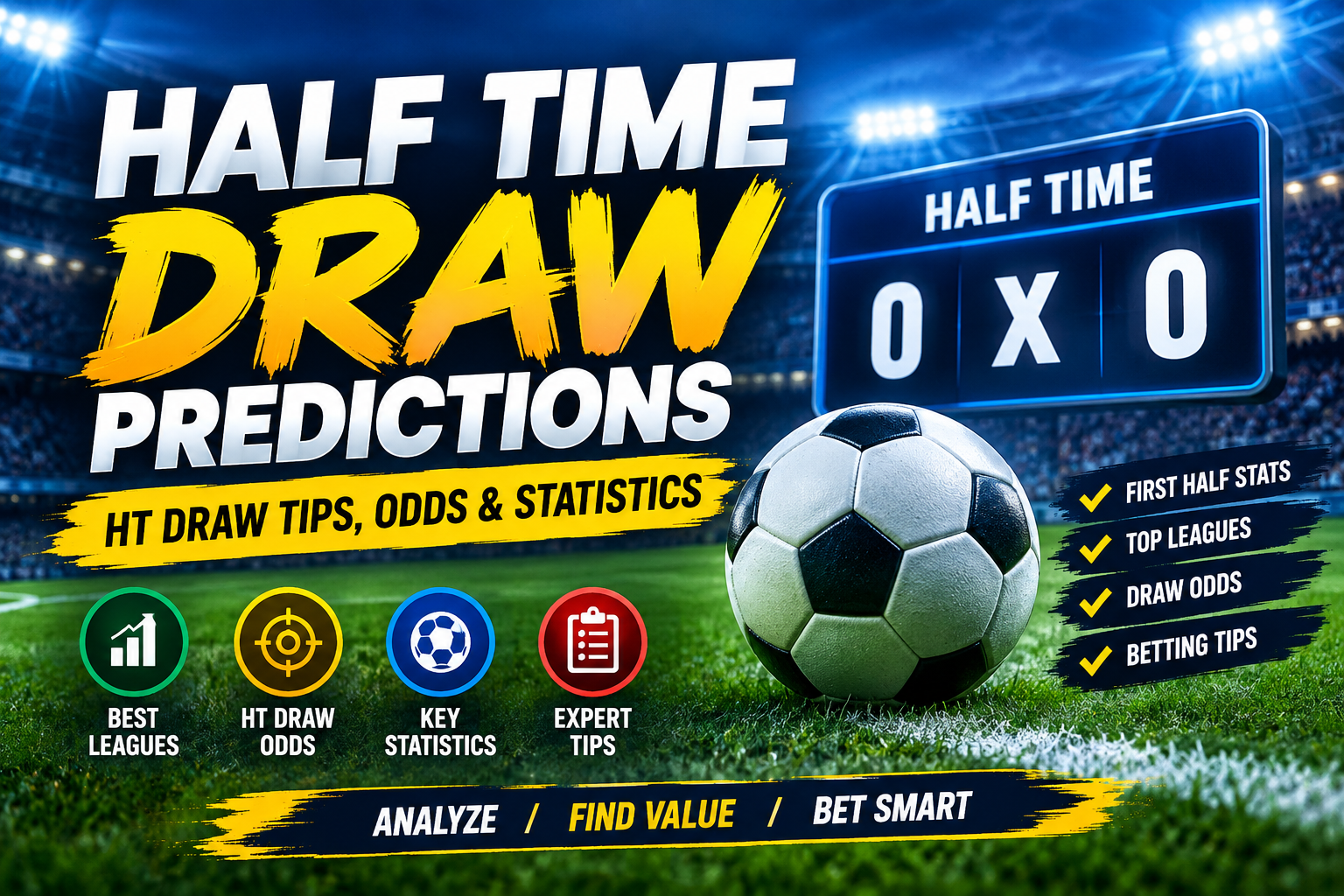
Half-Time Draw Predictions are a popular football betting market for players looking beyond the traditional full-time result. Instead of predicting whether the home or away team will win the match, the HT Draw (X) prediction focuses only on the score at the end of the first 45 minutes.
A half-time draw can occur at 0-0, 1-1, 2-2 or any other level score when the referee ends the first half. For football prediction analysis, this market is particularly interesting because teams often approach the opening 45 minutes differently from the second half.
Our approach to half-time draw predictions focuses on statistics such as first-half goals, previous half-time results, team attacking and defensive records, home and away performance, head-to-head statistics and the available betting odds.
Important: Football predictions are based on statistical analysis and do not guarantee a winning result.
What Is a Half-Time Draw in Football?
A half-time draw, usually represented by X in the HT 1X2 market, means that both teams have scored the same number of goals when the first half finishes.
Examples include:
- 0-0 at half time
- 1-1 at half time
- 2-2 at half time
- 3-3 at half time
The final result does not matter for a half-time draw prediction. A match can finish 0-3, 2-1 or 4-2 and the HT Draw prediction can still be successful if the teams were level at the interval.
This makes HT Draw predictions different from the traditional full-time Draw market.
Why Do Half-Time Draws Happen So Often?
There are several reasons why matches can remain level during the opening 45 minutes.
Some teams begin matches cautiously, especially when facing stronger opposition. Away teams may prioritize defensive organization, while home teams can take time to establish attacking pressure.
Another important factor is the timing of goals. If neither team scores during the opening period, the 0-0 half-time result automatically becomes a draw.
Tactical approaches, defensive organization, team strength and match importance can therefore have a significant influence on the probability of a first-half draw.
Half-Time Draw Predictions and Betting Odds
Odds are an important part of any football betting analysis.
For example, if the bookmaker offers:
HT Draw (X) @ 2.10
the basic implied probability before considering bookmaker margin is approximately:
1 ÷ 2.10 = 47.62%
Similarly:
| HT Draw Odds | Approx. Implied Probability |
|---|---|
| 1.80 | 55.56% |
| 1.90 | 52.63% |
| 2.00 | 50.00% |
| 2.10 | 47.62% |
| 2.20 | 45.45% |
| 2.30 | 43.48% |
| 2.50 | 40.00% |
These figures should not be interpreted as the bookmaker’s exact probability because bookmaker margins and pricing differences must also be considered.
The important principle is to compare the estimated probability from your analysis with the probability implied by the odds.
What Odds Are Common for Half-Time Draw Predictions?
HT Draw odds vary considerably depending on the teams, competition and bookmaker.
In many matches, the first-half draw can appear around the 1.80–2.50 range, although higher or lower prices are possible.
A match with two evenly matched teams and a strong history of low-scoring first halves may have shorter HT Draw odds.
Conversely, a fixture involving teams that regularly produce early goals may have a higher price for the first-half draw.
Therefore, simply searching for the highest odds is not enough. The objective should be to identify matches where the statistics and the market price provide a reasonable combination.
Which Leagues Have Many First-Half Draws?
League statistics can be useful when searching for potential first-half draw matches.
However, rankings change depending on the season and the number of matches included in the sample.
For example, data updated on 17 September 2026 showed high first-half draw rates in several competitions. One current dataset listed Paraguay’s Division Profesional at 64.50%, MLS at 62.00%, Venezuela’s Primera Division at 58.00%, Egypt Division 1 at 56.50%, and Argentina’s Nacional B at 56.00% in its sample.
Another September 2026 dataset showed particularly high HT Draw percentages in competitions including Sweden’s Elitettan, Kosovo’s Superliga, Sweden’s Allsvenskan and Superettan, Georgia’s Erovnuli Liga and Italy’s Serie B.
These numbers demonstrate an important point: there is no permanent list of “best” half-time draw leagues. Statistics should be checked for the current season or recent sample before selecting matches.
Examples of Leagues to Monitor
Depending on the current statistical period, football bettors researching HT Draw predictions may monitor:
- Serie B – Italy
- Serie C – Italy
- Ligue 2 – France
- Primera Nacional – Argentina
- Primera Division – Argentina
- MLS – USA
- K League – South Korea
- Allsvenskan – Sweden
- Superettan – Sweden
- Erovnuli Liga – Georgia
- Greek competitions
- Spanish lower divisions
- South American competitions
For example, an August 2026 monthly dataset recorded K League 2 at 65.00% first-half draws, Montenegro’s First League at 64.00%, Ligue 2 at 61.11% and K League 1 at 60.00%.
The figures are historical samples rather than guarantees for future matches.
How to Find Good Half-Time Draw Predictions
A statistical approach can make the search for HT Draw tips more systematic.
1. Check First-Half Draw Statistics
Start by examining how frequently each team has been level at half time.
For example:
- Team A: 6 HT draws in its last 10 matches
- Team B: 5 HT draws in its last 10 matches
This does not guarantee another draw, but it provides useful historical context.
2. Analyze First-Half Goals
Look at how many goals both teams typically score and concede before half time.
A match involving two teams that frequently produce 0-0 or 1-1 half-time scores can be more interesting for HT Draw analysis than a fixture involving two teams with frequent early goals.
3. Check Home and Away Patterns
Home and away statistics can reveal important differences.
A team may regularly start aggressively at home but play more cautiously away from home.
Therefore, compare:
Home team’s first-half home statistics
with
Away team’s first-half away statistics.
4. Examine Recent Form
Recent matches can provide information about current tactical patterns.
Check the last 5–10 games and record:
- Half-time score
- Full-time score
- First-half goals
- Goals conceded before half time
- Number of HT Draws
The objective is to identify a consistent pattern rather than relying on one or two previous matches.
5. Study Head-to-Head Results
Head-to-head statistics can sometimes reveal whether two teams regularly produce balanced first halves.
However, older meetings should be treated carefully because managers, players, tactics and team strength can change.
6. Compare the Odds
After identifying a potentially suitable match, compare the available HT Draw odds.
A statistical prediction should always be considered together with the market price.
For example:
Estimated HT Draw probability: 52%
Available odds: 2.20
The odds imply approximately 45.45%, so the statistical estimate and market price would be worth investigating further.
This is not a guarantee of value or profit; the quality of the probability estimate is crucial.
0-0 Half-Time Predictions
The 0-0 HT prediction is closely related to the half-time draw market but is more specific.
A Half-Time Draw bet wins with any level score, including 0-0, 1-1 or 2-2.
A 0-0 HT Correct Score prediction only wins if the score is exactly 0-0 at half time.
Therefore, the 0-0 market generally requires more specific analysis.
When researching 0-0 half-time possibilities, consider:
- First-half goals scored
- First-half goals conceded
- Average first-half goals
- Percentage of 0-0 half-time results
- Recent defensive form
- Expected goals
- Tactical approach
- Importance of the fixture
HT Draw vs Full-Time Draw
It is important not to confuse these two markets.
| Market | What Must Happen? |
|---|---|
| HT Draw | Teams are level after 45 minutes |
| Full-Time Draw | Teams are level after 90 minutes |
| HT/FT Draw-Draw | Teams are level at half time and full time |
| HT 0-0 | Exact score is 0-0 at half time |
A match can therefore be:
HT Draw → Full-Time Home Win
or
HT Draw → Full-Time Away Win
or
HT Draw → Full-Time Draw.
This is why the HT Draw market can be interesting independently from the final result.
Half-Time Draw and HT/FT Betting
Another related market is Half-Time/Full-Time (HT/FT).
For example:
X/X
means the match is drawn at half time and finishes as a draw.
X/1
means the match is drawn at half time and the home team wins at full time.
X/2
means the match is drawn at half time and the away team wins at full time.
These markets normally have higher odds because two separate match states must be predicted correctly.
Historical HT/FT statistics can help identify teams that frequently remain level at half time and continue to produce a draw at full time.
First-Half Draw Prediction Checklist
Before selecting an HT Draw prediction, consider the following:
✓ First-half draw percentage
✓ Last 5–10 half-time results
✓ Average first-half goals
✓ 0-0 and 1-1 frequency
✓ Home team’s home statistics
✓ Away team’s away statistics
✓ Recent form
✓ Head-to-head statistics
✓ Expected goals and attacking numbers
✓ Team news and expected lineups
✓ Tactical approach
✓ Motivation and importance of the match
✓ Current HT Draw odds
The more independent factors point toward a balanced opening period, the stronger the statistical basis for further investigation.
Can Half-Time Draw Predictions Guarantee a Winning Bet?
No.
Even when a league has a high historical percentage of first-half draws, individual football matches remain unpredictable.
A team that has produced several consecutive HT Draws can score early in the next game. Likewise, two teams with historically low first-half scoring can produce an early goal.
Statistics should therefore be used to identify probabilities and patterns, not to guarantee results.
Why League Selection Matters
One of the most important elements of football prediction analysis is choosing the right competitions.
Current 2026 data shows that first-half draw percentages can vary substantially between leagues and even between monthly samples. For example, September data has shown competitions with HT Draw rates above 60%, while broader datasets produce different rankings.
This means that bettors should avoid relying on a static list of leagues.
Instead, regularly update your database and look for competitions where:
HT Draw percentage + team statistics + match context + odds
all provide a consistent picture.
Final Thoughts on Half-Time Draw Predictions
Half-Time Draw Predictions can be an interesting football betting market for anyone who prefers statistical analysis over simply predicting the final winner.
The key is to focus on the first 45 minutes. Study first-half goals, historical HT results, home and away performance, recent form, head-to-head records and tactical tendencies before looking at the available odds.
Leagues such as Serie B, Ligue 2, MLS, K League, Scandinavian competitions, South American leagues and selected lower divisions can provide interesting statistical samples, but league performance should always be checked using current data.
The best approach is not to select every match with a high historical draw percentage. Instead, build a shortlist of fixtures and compare the statistical probability with the available HT Draw odds.
Category: Betting ResourcesBest Football Leagues for Draw Predictions & Betting
Best Football Leagues for Draw Predictions & Betting
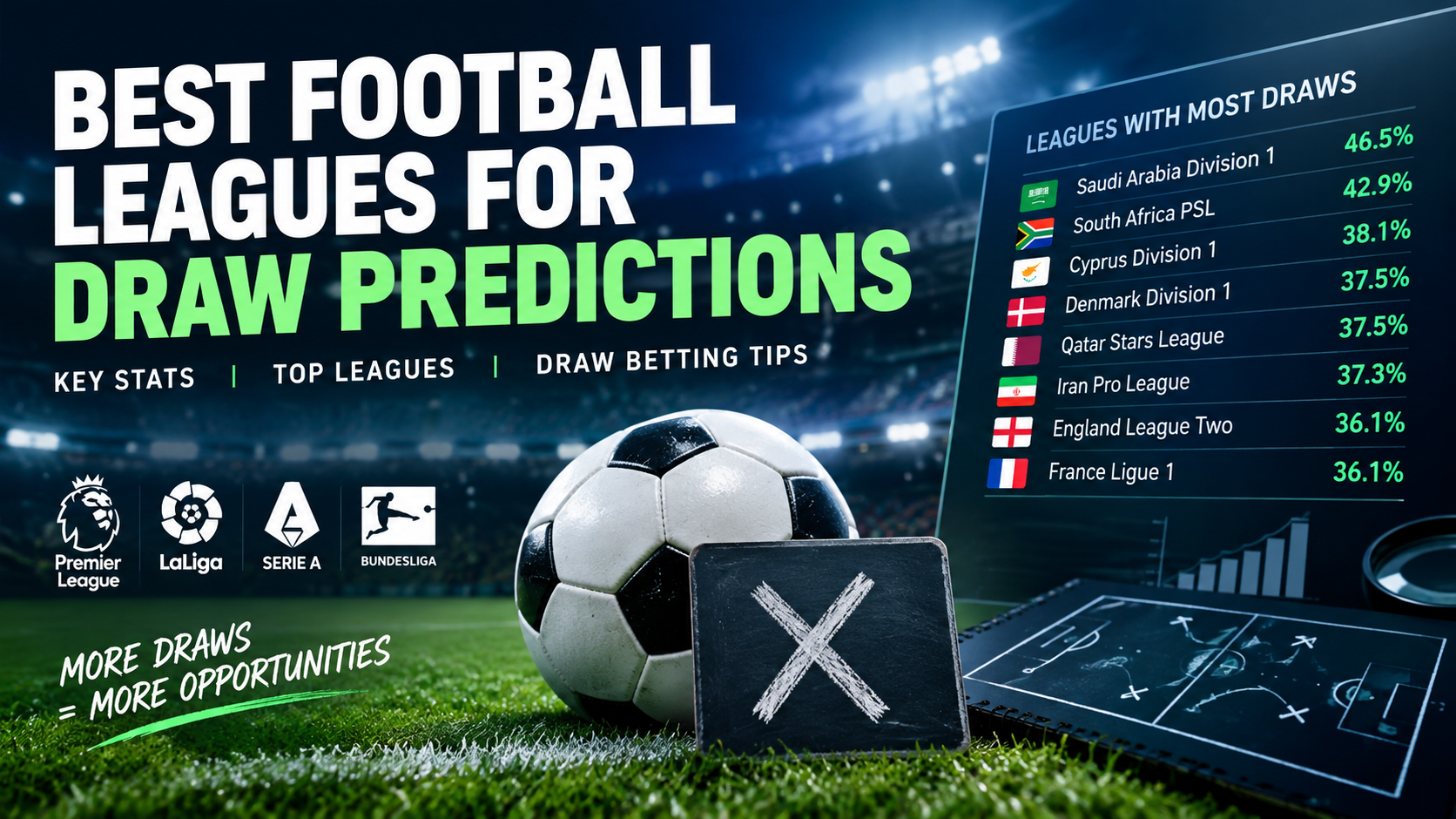
If you are looking for football draw predictions, one of the first things worth researching is the league itself. Some football competitions consistently produce more drawn matches than others, making their statistics particularly interesting for draw bettors.
However, simply choosing a league with a high percentage of draws is not enough. A successful draw analysis should combine league statistics, team form, home and away records, goals, head-to-head results and current match conditions.
In this guide, we look at the best football leagues to monitor for draw predictions, how draw statistics can be used, and which factors can help you identify potentially balanced matches.
What Are the Best Football Leagues for Draw Predictions?
There is no permanent list of the best draw leagues because percentages change as the season progresses. Different statistical databases can also produce different figures depending on the period and competitions included.
Current league statistics show several competitions with particularly high draw percentages. These include Saudi Arabia Division 1, South Africa PSL, Cyprus Division 1, Denmark Division 1, Qatar Stars League, Iran Pro League, England League Two and France Ligue 1.
Other statistical databases currently show high draw percentages in competitions such as Paraguay Division Profesional, MLS, Venezuela Primera Division, Argentina Primera Division and Italy Serie B.
The important point is that draw statistics should be monitored regularly rather than treated as a fixed ranking.
Why League Draw Statistics Matter
If a competition regularly produces a large number of draws, it can provide more potential matches to investigate.
For example, a league with a draw rate close to 40% has a significantly different draw profile from a league where only around 20–25% of matches finish level.
But league statistics are only the first filter.
A high-draw league does not mean that every match in that competition is a good draw prediction.
Leagues With a High Draw Percentage
Here are some competitions that can be worth monitoring when researching football draw predictions:
| League | Current Draw Trend |
|---|---|
| Saudi Arabia Division 1 | Very high |
| South Africa PSL | Very high |
| Cyprus Division 1 | High |
| Denmark Division 1 | High |
| Qatar Stars League | High |
| Iran Pro League | High |
| England League Two | Above average |
| France Ligue 1 | Above average |
| France Ligue 2 | Above average |
These categories are intended as a general statistical guide, not a permanent ranking. The exact percentages can change considerably during a season.
Which Leagues Have the Most Draw Matches?
When searching for leagues with the most draws, it is useful to compare several statistical sources and look at the same period.
Current databases can produce different results. One source may show Saudi Arabia Division 1 and South Africa PSL near the top, while another may show Paraguay’s Primera División or MLS with very high draw numbers.
Why does this happen?
Statistics can differ because of:
- Different seasons
- Different numbers of matches
- Different competition filters
- Different update times
- Inclusion or exclusion of particular competitions
Therefore, rather than asking which league is permanently number one for draws, a better question is:
Which leagues currently have an above-average draw percentage?
That is much more useful for daily football betting analysis.
How to Find Football Matches Suitable for Draw Predictions
Once you identify a league with a strong draw trend, the next step is to analyze individual matches.
1. Check Recent Team Form
Start by looking at the last five to ten matches.
A team that regularly produces draws may be more interesting for the X market than a team that almost always wins or loses.
For example:
Home team:
Win – Draw – Draw – Loss – Draw
Away team:
Draw – Win – Draw – Loss – Draw
When both teams have recently produced several draws, the match deserves further investigation.
However, recent results should always be considered together with the quality of the opponents.
2. Compare Home and Away Records
This is one of the most important factors when predicting football draws.
The home team’s overall record may look balanced, but its home statistics could tell a completely different story.
Likewise, an away team’s overall draw percentage may be high while its away record contains very few draws.
Look at:
- Home wins
- Home draws
- Home defeats
- Away wins
- Away draws
- Away defeats
A match becomes more interesting for draw analysis when both teams demonstrate a tendency toward draws in the specific home/away situation.
3. Compare Goals Scored and Conceded
Goals can provide another useful indication.
If two teams have similar attacking and defensive statistics, the match may be more evenly balanced.
For example:
Team A
- 15 goals scored
- 14 conceded
Team B
- 14 goals scored
- 15 conceded
These numbers suggest a relatively similar statistical profile.
Compare this with a match where one team has scored 35 goals and the other only 10. The second match may require much more caution when considering a draw.
4. Look at Head-to-Head Statistics
Head-to-head results can provide additional context.
Check the previous meetings between the teams and look for:
- Number of draws
- Common scorelines
- Goals scored
- Home advantage
- Recent meetings
For example, several recent 1-1 or 0-0 results can indicate that the fixture has historically produced closely contested games.
However, older head-to-head results should not be given too much weight because teams, managers and squads change.
5. Check Half-Time Draw Statistics
Some leagues produce a particularly high number of half-time draws.
This can be useful for bettors interested in:
- Half-Time Draw
- HT/FT Draw/Draw
- First-Half Under 1.5 Goals
- 0-0 at Half-Time
A high half-time draw percentage can indicate that teams frequently enter the second half level.
Nevertheless, a half-time draw does not automatically mean that the match will finish as a draw.
Best Markets for Draw Betting
The traditional draw market is represented by X.
For example:
Home Team – Away Team
Prediction: X
Other draw-related markets include:
Full-Time Draw
The match must finish level after normal time and stoppage time.
Common draw scorelines include:
- 0-0
- 1-1
- 2-2
Half-Time Draw
The score must be level at the end of the first half.
Possible results include:
- 0-0
- 1-1
- 2-2
Draw/Draw HT/FT
This is a more specific prediction where the match must be level both at half-time and full-time.
Prediction: X/X
Double Chance
If the statistics suggest that a draw is possible but one team has a slight advantage, double-chance markets can also be considered.
Examples include:
- 1X – Home win or draw
- X2 – Away win or draw
The Draw Prediction Checklist
Before selecting a football draw prediction, check as many of these factors as possible:
✓ The league currently has a high draw percentage
✓ Both teams have produced several recent draws
✓ The home team has a strong home-draw record
✓ The away team has a strong away-draw record
✓ The teams have similar points-per-match statistics
✓ Their goals scored are relatively similar
✓ Their goals conceded are relatively similar
✓ Recent performances are relatively balanced
✓ Head-to-head meetings contain several draws
✓ Neither team has a major statistical advantage
✓ Half-time draw statistics support a balanced match
✓ There are no major team-news factors that significantly change the matchup
The more factors that point in the same direction, the more interesting the fixture becomes for further analysis.
Common Mistakes When Predicting Football Draws
Choosing Every Match From a High-Draw League
A league with many draws does not mean every fixture should be selected.
Always analyze the individual teams.
Looking Only at the Last Five Matches
Five matches can be a very small sample.
Try to combine recent form with longer-term home, away and league statistics.
Ignoring Home and Away Performance
Overall statistics can hide important differences between home and away performance.
Always check the specific location of the match.
Relying Too Much on Head-to-Head Results
Historical meetings can be useful, but very old matches may have little relevance to the current teams.
Assuming a Low-Scoring Match Will Be a Draw
A 0-1 result is still a low-scoring match, but it is not a draw.
Low goal averages can support certain draw scenarios, but they should not be used as the only reason for selecting X.
How to Build a Daily Draw Prediction Strategy
A simple approach is to use a three-stage filtering process.
Stage 1 – Find Draw-Friendly Leagues
Monitor competitions with an above-average current draw percentage.
Stage 2 – Find Balanced Teams
Look for teams with similar:
- Points
- Goals
- Recent form
- Home/away performance
- Defensive statistics
Stage 3 – Analyze the Match
Finally, examine:
- Injuries and suspensions
- Starting lineups
- Motivation
- League position
- Recent schedule
- Head-to-head results
- Market odds
This process can reduce the number of matches you need to analyze and help you focus on fixtures with a stronger statistical case for a draw.
Football Draw Predictions: Statistics vs. Odds
Statistics are important, but betting odds can provide another useful piece of information.
If a draw is priced very low, the bookmaker’s market is already assigning a relatively high probability to that outcome.
If the draw price is much higher, the market may be considering the draw less likely.
This does not mean that the highest or lowest odds automatically represent the best betting opportunity.
Instead, compare the statistical probability suggested by your analysis with the probability implied by the odds.
Final Thoughts on the Best Leagues for Draw Predictions
Finding football draws starts with identifying competitions where drawn matches occur frequently.
Leagues such as Saudi Arabia Division 1, South Africa PSL, Cyprus Division 1, Denmark Division 1, Qatar Stars League, Iran Pro League, England League Two and France Ligue 1 can be useful competitions to monitor when researching draw statistics.
But the league alone should never determine a prediction.
The strongest analysis combines league draw percentage, recent form, home and away records, goals, head-to-head statistics and current team information.
Remember that football is unpredictable and no statistical method can guarantee a draw. Use league statistics as a starting point for finding potentially balanced matches, then perform a detailed match-by-match analysis before making any betting decision.
Frequently Asked Questions
Which football league has the most draws?
There is no permanent answer because draw percentages change throughout the season and different statistical databases use different samples. Current statistics can be used to identify leagues with unusually high draw rates.
What is a good draw percentage for a football league?
A draw percentage around 35% or higher can be considered a useful starting point for identifying draw-heavy competitions, although the ideal benchmark depends on the sample and league.
What are the best leagues for draw betting?
Competitions currently showing high draw rates can include Saudi Arabia Division 1, South Africa PSL, Cyprus Division 1, Denmark Division 1, Qatar Stars League, Iran Pro League and several European lower divisions.
How can I predict a football draw?
Start with league draw statistics, then compare recent form, home and away records, goals scored and conceded, head-to-head results and team news. No single statistic is enough on its own.
Is a high league draw percentage enough to bet on X?
No. League statistics are useful for finding potential matches, but the individual teams and circumstances of the fixture should also be analyzed.
What are the most common football draw scorelines?
0-0 and 1-1 are among the most common draw scorelines, although 2-2 and other level results also occur.
Tags: best leagues for draw betting, Draw betting tips, football draw predictions, football draw statistics, leagues with most draws Category: Betting ResourcesWhy the Football Draw Remains the Game’s Most Underrated Match Outcome
The 1-1 Blind Spot: Why Draws Deserve Better Football Analysis
A draw is most plausible when two teams have similar scoring expectations, and neither has a strong reason to open the match. That sounds simple. It is routinely ignored because previews prefer a winner, while fans remember decisive late goals more readily than long spells of controlled risk. Serious draw prediction starts elsewhere: expected goals for and against, home advantage, lineup quality, game-state incentives, and the price itself. The aim is not to hunt 0-0 scores every weekend. It is to identify matches where the gap between the teams is smaller than public perception and where the tactical cost of losing rises faster than the value of chasing a second goal.
A Draw Is an Outcome, Not an Attacking Failure
Law 10 of the IFAB Laws of the Game states that a match is drawn when both teams score the same number of goals. Competition rules may then require extra time or penalties, yet the result after 90 minutes remains distinct for many football betting markets. That distinction catches casual readers. A cup tie can “finish” with one team advancing while the three-way market still settles as a draw if regulation time ended level. Always read whether a market covers 90 minutes, extra time, or qualification.
Low totals are only the first filter
Football’s modest scoring rate makes equality more common than in high-scoring sports, but a low total alone does not create value. A simple Poisson model assigns a probability to each team scoring zero, one, two or more goals, then adds the matching-score combinations. Similar expected goal rates lift the sum. Extreme mismatch lowers it because the stronger side owns too many routes to a one-goal advantage.
The practical inputs are recent non-penalty expected goals, shot quality conceded, goalkeeper availability and home-away splits. Raw winless streaks are weaker evidence. A team can draw repeatedly because it finished poorly for a month, not because its structure reliably produces balanced matches.
The table can make 1-1 rational
Incentives change after the opening goal. A relegation rival may protect one point late, while a tournament favorite in a must-win match keeps adding attackers. First legs, final group games and congested schedules also alter acceptable risk. Watch substitutions: replacing a winger with a holding midfielder at 1-1 says more about the final 15 minutes than season-long possession.
Head-to-head records need restraint. Old meetings may involve different coaches, goalkeepers and tactical systems. Use them only when the same structural matchup remains—pressing against buildup, aerial strength against weak set-piece defense, or a narrow block that repeatedly slows one opponent.
Price the margin before backing the stalemate
Suppose the 1X2 odds are 2.40, 3.20 and 3.00. Their raw implied probabilities are 41.7%, 31.3% and 33.3%, totaling 106.3%; the excess is the bookmaker margin. Before placing a BD bet, normalize those percentages and compare the market’s draw estimate with a model built from team news and expected goals. The draw is valuable only when the offered price exceeds its fair probability. A higher number is not automatically a bargain.
A fast screen can hide a weak number
Live draw odds change after goals, red cards and long scoreless periods. Each move reflects less remaining time as well as the current score, so waiting does not guarantee a better price. The MelBet APK download latest version page lists live odds, bet tracking and cash-out tools for eligible events on mobile. Those functions make positions easier to monitor, while settlement rules and market suspension still control what can be placed. Never increase a stake merely because an app makes the next tap quicker.
Use five checks before the draw prediction
- Compare each team’s expected scoring rate, not just league position.
- Confirm absences in goal, central defense and center forward.
- Read the table: does one point genuinely help both sides?
- Separate 90-minute markets from qualification markets.
- Convert odds to implied probability and remove the margin.
If one of those inputs is missing, reduce confidence rather than filling the gap with a favorite scoreline.
Category: Betting ResourcesSmart Betting 1X2: How to Make Better Football Predictions
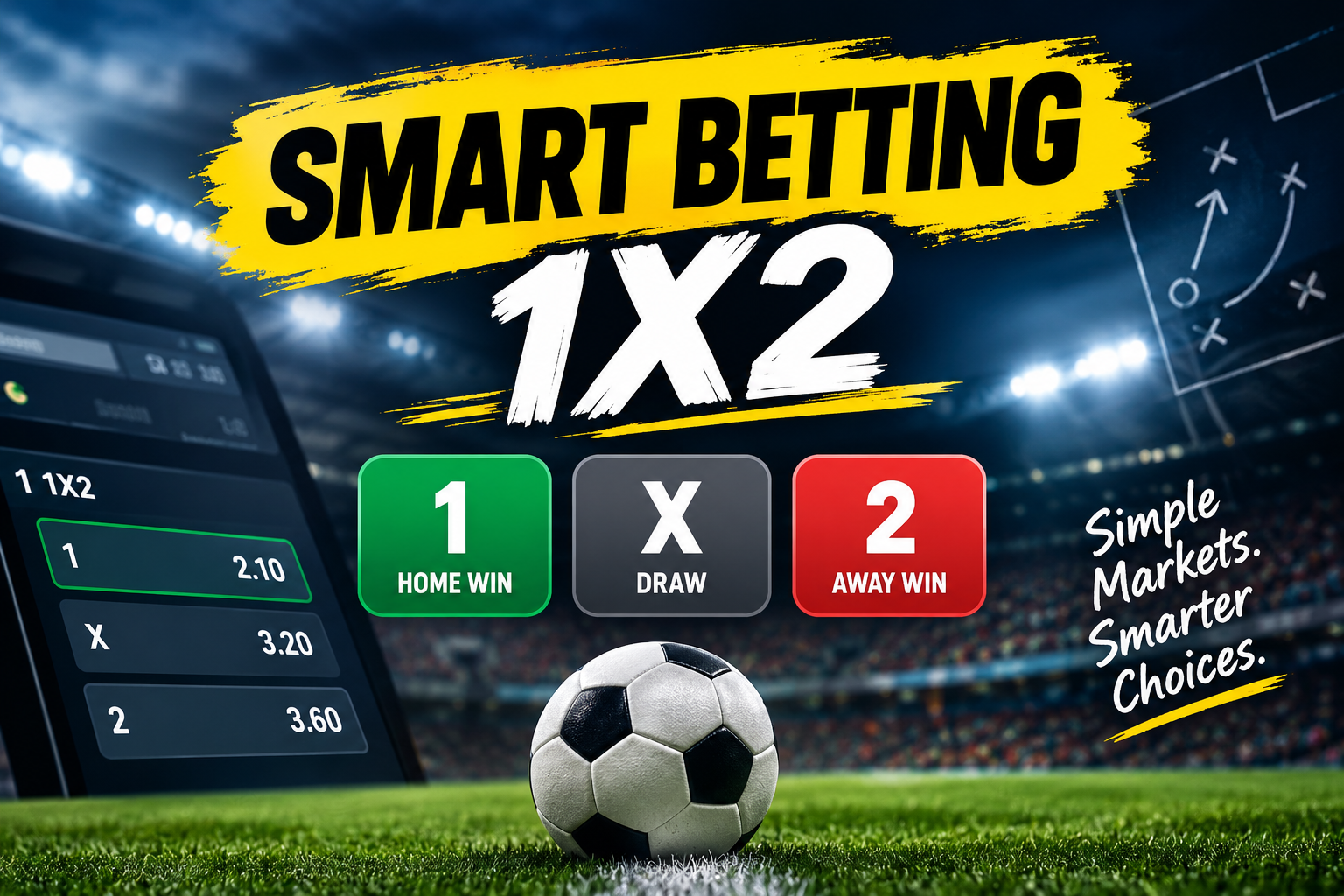
The 1X2 betting market is one of the most popular and easiest football betting markets to understand. You choose between three possible outcomes: 1 for a home win, X for a draw, and 2 for an away win.
While the market looks simple, making smart 1X2 bets requires much more than simply choosing the team with the better reputation. Successful football betting involves analyzing form, statistics, injuries, home advantage, motivation, expected goals, and—most importantly—the relationship between probability and betting odds.
In this guide, we’ll explain how smart 1X2 betting works and how bettors can approach football predictions more systematically.
What Does 1X2 Mean in Football Betting?
The term 1X2 represents the three possible results of a football match:
- 1 – Home team wins
- X – Match ends in a draw
- 2 – Away team wins
For example:
Manchester United vs Chelsea
- 1 – Manchester United win
- X – Draw
- 2 – Chelsea win
If you predict 1 and Manchester United win, your bet wins. If the match ends in a draw or Chelsea win, the 1X2 selection loses.
Unlike double-chance betting, the 1X2 market requires you to select exactly one of the three possible outcomes.
Why Is 1X2 Betting So Popular?
The popularity of 1X2 betting comes from its simplicity. Football fans already understand the basic objective of the game, so selecting a winner or draw feels natural.
However, simplicity can also be misleading.
A team that looks like an obvious winner may be offered at extremely low odds because the sportsbook considers that outcome highly likely. The question for a smart bettor isn’t simply:
“Who will win?”
A better question is:
“Are the odds high enough compared with the probability that I believe this outcome has?”
This distinction is at the heart of smart betting.
Smart Betting Is About Value, Not Just Winners
One of the biggest mistakes beginners make is believing that picking more winners automatically means making more money.
It doesn’t.
Imagine you believe a team has a 60% probability of winning. The fair decimal odds corresponding to that probability are approximately:
1 ÷ 0.60 = 1.67
If a sportsbook offers odds of 1.50, the price may not provide value even though your prediction could still be correct.
If another sportsbook offers 1.80, the same prediction could potentially offer better value.
This is why smart betting 1X2 is about finding situations where your estimated probability is higher than the probability implied by the odds.
How to Analyze a 1X2 Match
Before selecting a 1X2 prediction, consider several factors.
1. Recent Form
Look at the teams’ recent results, but don’t rely exclusively on the last five matches.
Consider:
- Wins
- Draws
- Losses
- Goals scored
- Goals conceded
- Quality of opponents
- Home and away performances
A team winning four consecutive matches against weak opposition may not necessarily be stronger than a team with fewer wins against high-quality opponents.
2. Home and Away Performance
Home advantage remains an important factor in football.
Some teams perform significantly better in their own stadium, while others are more competitive away from home.
When analyzing a 1X2 prediction, compare:
Home team’s home record
with
Away team’s away record
This can provide a much more accurate picture than looking only at overall league standings.
3. Head-to-Head Records
Previous meetings can provide useful context, especially when there are consistent tactical patterns.
However, head-to-head statistics should not be treated as a prediction by themselves.
Players, coaches, tactics, and team quality change over time. A match between two teams three seasons ago may have very little relevance to today’s game.
4. Injuries and Suspensions
Team news can significantly affect 1X2 predictions.
The absence of a starting goalkeeper, central defender, creative midfielder, or main striker can change the expected strength of a team.
Before placing a bet, check whether important players are unavailable.
5. Motivation
Motivation is another factor that can be difficult to quantify but important to understand.
For example, a team fighting for:
- The league title
- Champions League qualification
- European qualification
- Promotion
- Survival
may approach a match differently from a team with little left to play for.
Cup matches, relegation battles, and final league games can also create unusual circumstances.
Don’t Ignore the Draw
One of the most important lessons in 1X2 betting is learning to respect the draw.
Many bettors naturally focus on identifying a winner and underestimate how often football matches finish level.
A draw can become particularly interesting when:
- Both teams have similar quality
- Both teams have strong defensive records
- Neither side wants to take excessive risks
- The match has high stakes
- Recent results show a high number of draws
- Both teams have relatively low scoring rates
The draw isn’t automatically a good bet, but it should always be considered as one of the three possible outcomes.
Understanding 1X2 Betting Odds
Decimal odds show the potential return from a successful bet, including your original stake.
For example:
1.50 → implied probability of approximately 66.7%
2.00 → implied probability of 50%
3.00 → implied probability of approximately 33.3%
The basic implied probability formula is:
1 ÷ decimal odds × 100
So, odds of 2.50 imply:
1 ÷ 2.50 × 100 = 40%
However, sportsbook odds include a margin, meaning the implied probabilities of all three 1X2 outcomes normally add up to more than 100%.
Compare 1X2 Odds Before Betting
If you’re serious about smart betting, comparing odds is essential.
Different sportsbooks can offer different prices for exactly the same outcome.
For example:
OutcomeBookmaker ABookmaker BBookmaker CHome Win1.751.821.78Draw3.603.703.55Away Win4.504.304.60
Even a relatively small difference in odds can become significant over many bets.
The objective isn’t simply to find the sportsbook with the highest odds on every match, but to consistently compare prices before placing a wager.
Use Statistics, But Don’t Overload Your Analysis
Modern football provides enormous amounts of data.
You can analyze:
- Expected goals (xG)
- Shots
- Shots on target
- Possession
- Big chances
- Goals per match
- Defensive errors
- Set-piece performance
- Home/away records
- First-half performance
- Second-half performance
Statistics can improve your analysis, but more information doesn’t automatically mean a better prediction.
The key is identifying statistics that actually help explain the likely outcome.
A Simple Smart 1X2 Strategy
A practical approach can be built around five steps.
Step 1: Identify the Match
Choose a league or competition you understand well.
Step 2: Analyze Both Teams
Review recent form, home/away performance, injuries, motivation, and important statistics.
Step 3: Estimate the Probability
Instead of immediately looking at the odds, estimate how likely you believe each outcome is.
For example:
- Home win: 50%
- Draw: 28%
- Away win: 22%
Step 4: Compare Your Probability With the Odds
If your estimated probability for the home win is 50%, the approximate fair odds are:
1 ÷ 0.50 = 2.00
If the available odds are 2.20, you may have identified a potential value situation.
Step 5: Manage Your Bankroll
Even a strong prediction can lose.
Never treat one 1X2 selection as guaranteed. Betting involves uncertainty, and a disciplined staking plan is more important than trying to recover losses quickly.
Common 1X2 Betting Mistakes
Betting Only on Big Teams
A famous club isn’t automatically a good bet.
Sometimes the market has already accounted for its reputation, resulting in very short odds.
Chasing Losses
Trying to recover a losing bet by increasing your stake can quickly turn a small loss into a much larger one.
Ignoring the Odds
Predicting the correct result isn’t enough. The price matters.
Overreacting to One Match
A single 4–0 win or 0–3 defeat shouldn’t completely change your opinion of a team.
Look for longer-term trends.
Betting Too Many Matches
Adding numerous selections to an accumulator may increase the potential payout, but every additional selection also creates another opportunity for the bet to lose.
A smaller number of carefully researched selections can be easier to manage.
Smart 1X2 Betting vs. Guessing
There is a major difference between analysis and guessing.
Guessing might look like:
“Team A is better, so I’ll choose Team A.”
Smart analysis looks more like:
“Team A has a strong home record, Team B has struggled away, Team A has its key players available, and the current odds appear higher than my estimated fair price.”
Neither approach guarantees a winning bet, but the second approach is more disciplined and repeatable.
Should You Bet 1X2 Every Day?
Not necessarily.
One of the strongest habits a bettor can develop is understanding that no bet is also a decision.
If the available odds don’t offer sufficient value, there is nothing wrong with skipping the match.
You don’t need to predict every football game. Instead, focus on the matches where your analysis gives you a clear reason to believe the available price is attractive.
Final Thoughts on Smart 1X2 Betting
Smart betting 1X2 isn’t about finding a guaranteed winner. Football doesn’t provide guarantees, and even the strongest teams can lose or draw.
The goal is to make better-informed decisions by combining team statistics, recent form, home and away performance, team news, motivation, and betting odds.
Most importantly, focus on value rather than certainty.
A good 1X2 bettor understands that losing bets are part of the process. The objective is to make disciplined decisions consistently, manage your bankroll carefully, compare odds, and avoid emotional betting.
When you treat 1X2 betting as a process rather than a guessing game, your approach becomes more structured—and potentially much more sustainable over the long term.
Bet responsibly. Never stake more than you can afford to lose.
Category: Betting Resources